

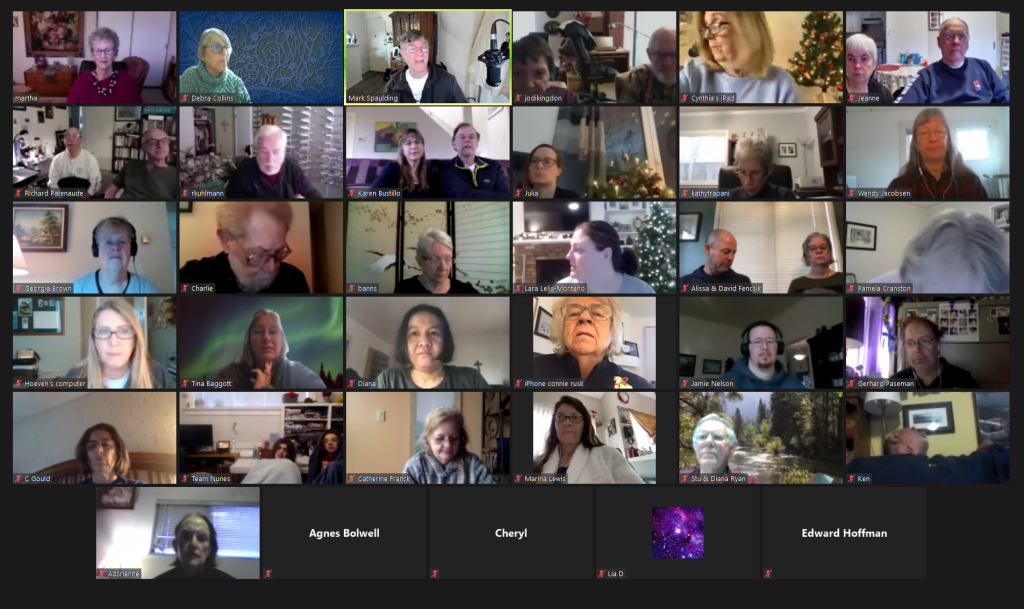
Covid-19 closed down so many churches, including mine. Sunday mornings had been Covid-19 had closed many churches, including mine. Sunday had been my time to gather with the faithful—sharing sermons, handshakes, hugs, and Coffee Hour. Then came the shutdown. Worship changed, as did our lives.
My church quickly moved services to Zoom. But the shift disrupted my sense of Spirit. The sound of church no longer rang with singing voices. The organ was silent. Prayer felt solitary. My focus shifted from altar and priest to a grid of screens—our new pews. The sanctuary became glimpses of living spaces, skewed by camera angles. Yet that became my way into Spirit. What is a sanctuary if not one’s home? That realization brought comfort.
Church had always been about community—expanding the spiritual size of one’s family. Zoom gave me a chance to see that family in their personal sanctuaries. I wondered: With whom did they share space? What art adorned their walls? Did they love pets, prefer mugs or tumblers, close their eyes when they prayed?
That winter, lacking heat in my studio, I moved into my kitchen to work. Each evening, I dined with friends—virtually.
As an artist drawn to faces, I found myself distracted by the Zoom boxes. They pulled me from the liturgy but opened another kind of sermon. If a word can be a prayer, how much more a face God created?
So I began taking screenshots—before services, during Coffee Hour, book clubs, vestry meetings, even church dinners. We laughed when we needed it most. Whenever we gathered, church was happening—and so were screenshots.

This art project became an open prayer of gratitude. I was thankful church continued, thankful for community, thankful to see my church family in a new light. There was no “amen” because the project was still unfolding. I began translating screenshots into papercut portraits—each one a prayer of appreciation. I planned to share them as I completed them, eventually combining them into a single artwork for the congregation.

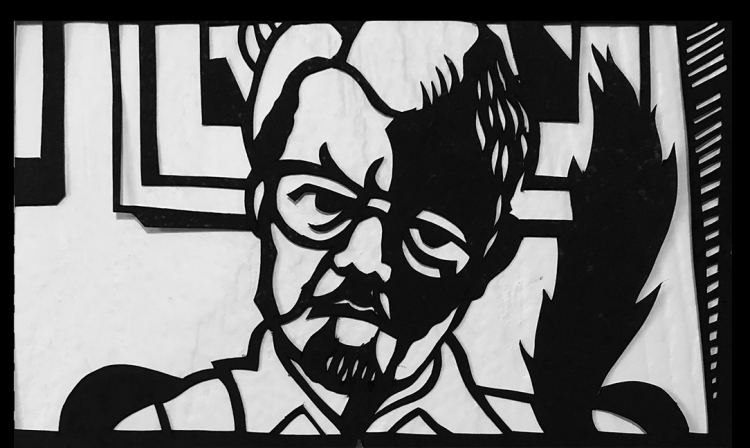
I’m cutting the portraits from index cards to save time The index cards are the perfect size and shape . I can cut a recognizable likeness and still have enough space to convey something of the surrounding sanctuary . Even so, the slightest variation in drawn line or or a cut, the likeness is ruined.
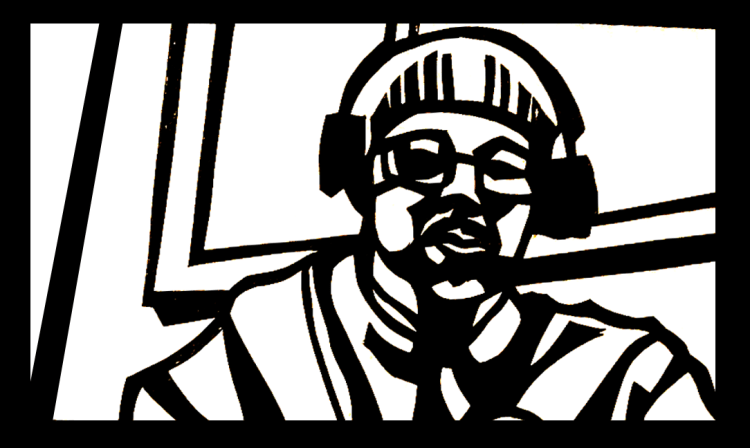
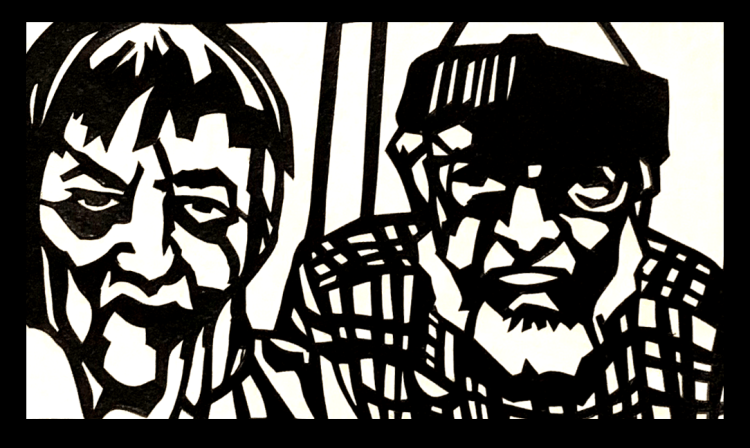
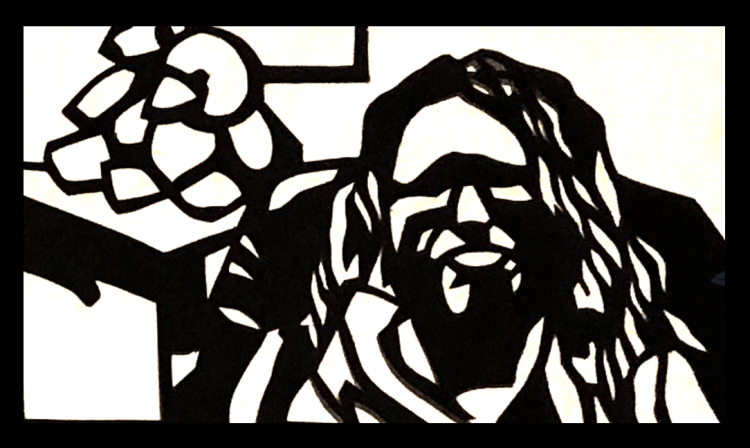
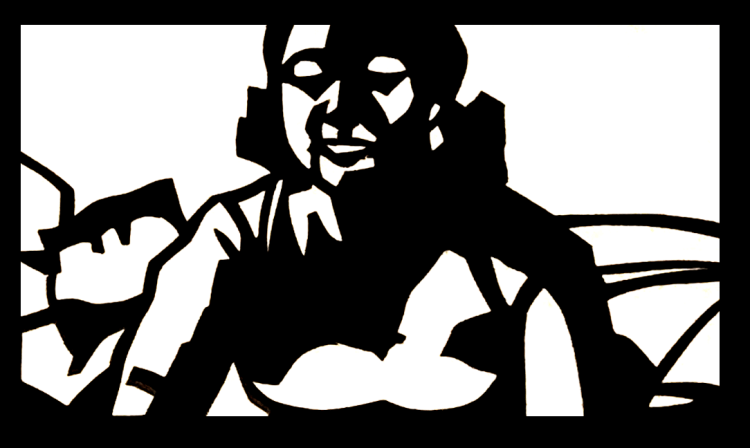


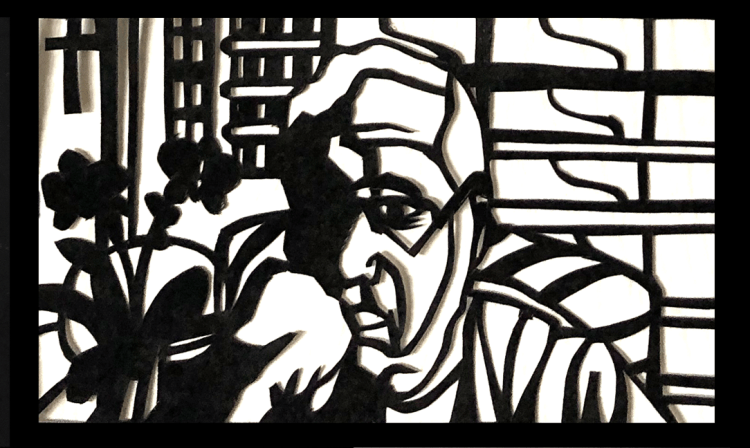

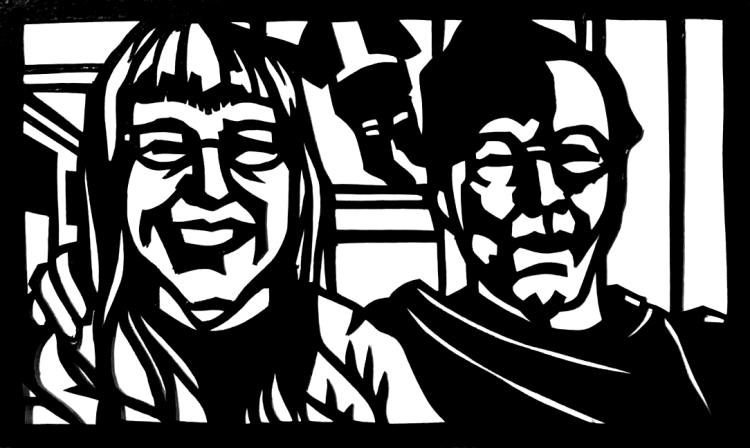


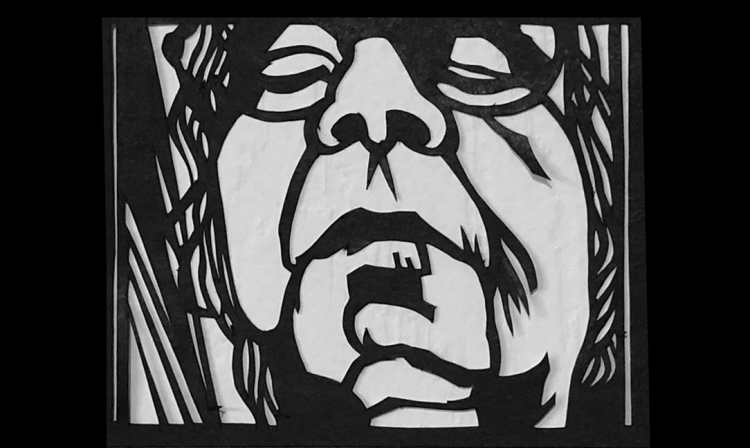
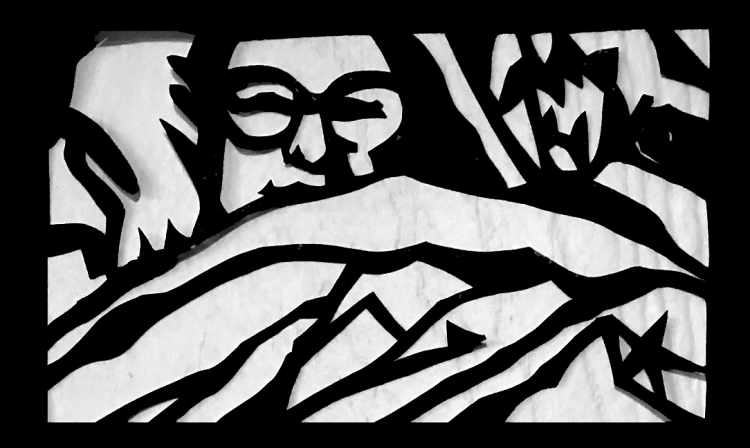

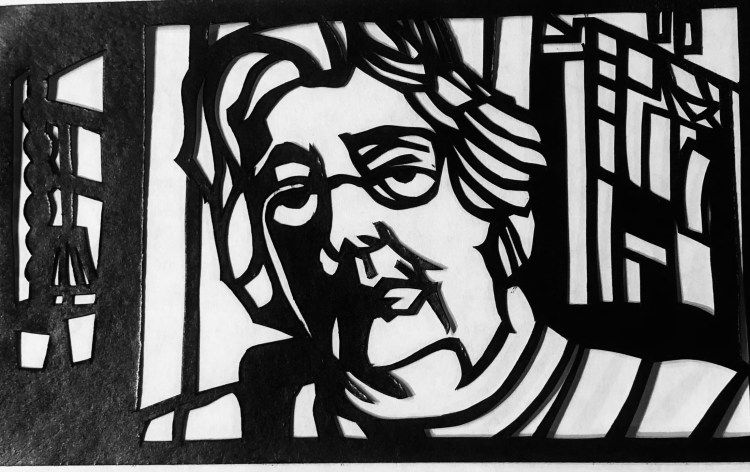


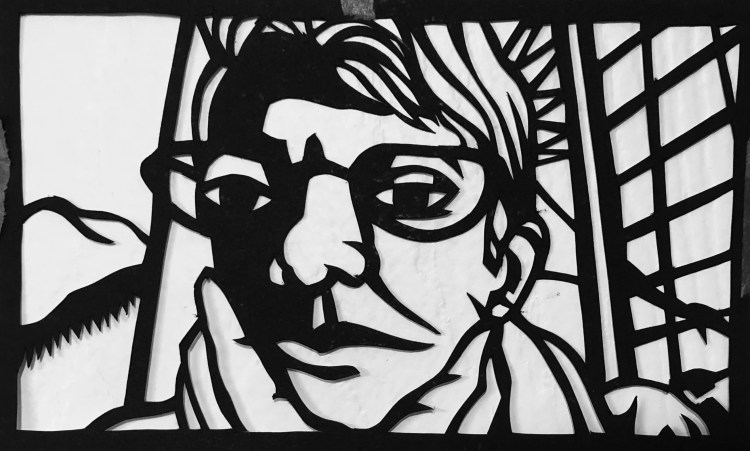


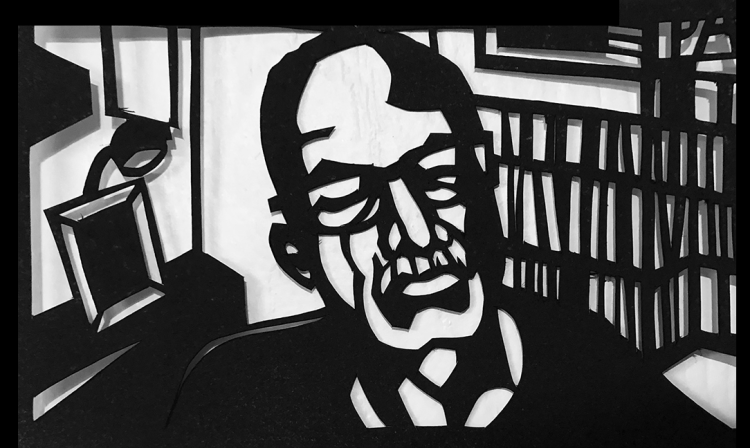


Why Paper Cut Portraits?
In an age of instant digital imagery, hand-cut paper portraits seemed outdated. Why spend time and energy cutting by hand what technology could produce in seconds? For me, the answer lay in tradition, intention, and meaning.
Fine art had long been out of reach for many. Yet in the 17th century, even the poor could afford silhouette portraits—quick likenesses made by artists with a small satchel of tools. That history inspired my choice: paper cuts were inexpensive and fast. I used index cards and often completed three portraits in an evening. Their fragility also resonated with me. As an artist, I valued how delicate paper mirrored the fragility of life.
Each cut brought a transformation. A simple, disposable material took on the presence of someone I knew and cared for. It gained worth—not just through the time and effort invested, but through the spirit captured in the likeness. The whole became greater than its parts.
While many artists traced photographs, I preferred drawing freehand from sight. It forced me to slow down and truly observe. It felt like a quiet, extended conversation—not through words, but through attentive seeing.
Cutting The Banner
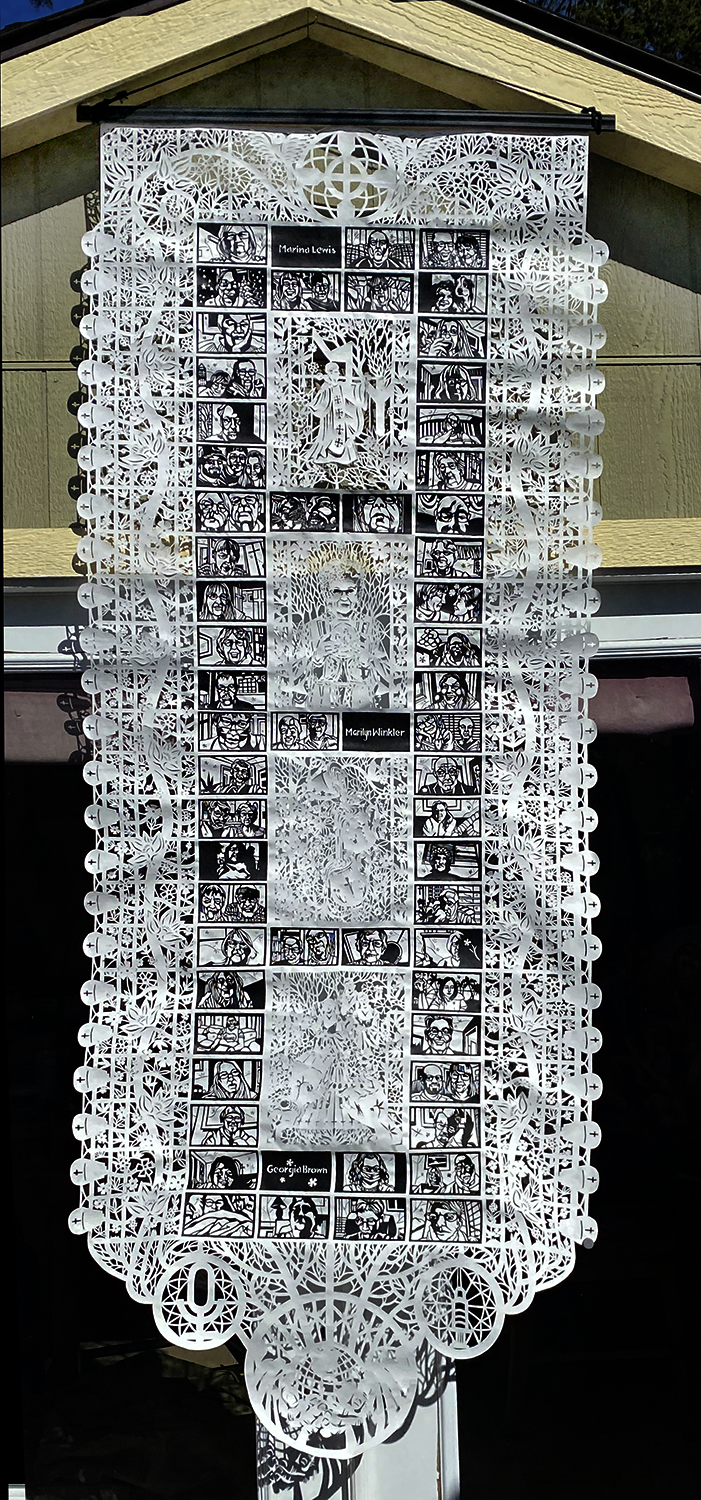
The plan had been to mount the portrait cuts onto a larger papercut banner. The photo showed the printed outline, ready to be cut from a sheet of Tyvek.
I had chosen Tyvek for its strength and durability, making the final piece easier to handle and more likely to last. The decision wasn’t easy—I had weighed the environmental impact of using a synthetic material. The manufacturer’s website noted that cutting waste could be mailed back for recycling, which helped ease my concerns.

At the base of the banner was a vignette symbolizing the earth held by God. From it grew a vine that encircled the portraits. These portraits were arranged around smaller vignettes representing what our congregation had missed during the Covid quarantine—music, social hour, and the Eucharist. At the top, a cut of the Great Vigil depicted our priest opening the sanctuary to all people. This cermony symbolizes Christ opening the gates of hell to free the souls held there. So reflective of our our times and the development of vaccines.
While I had hope to include a paper cut of everyone in the congregation. That was sadly impossible. Some of our member were unable to join us via a Zoom. Others had succumbed to the virus. So for those members, a index card was cut with just their name, similar is look as those who turn off their video during a Zoom call.


The Completed Work
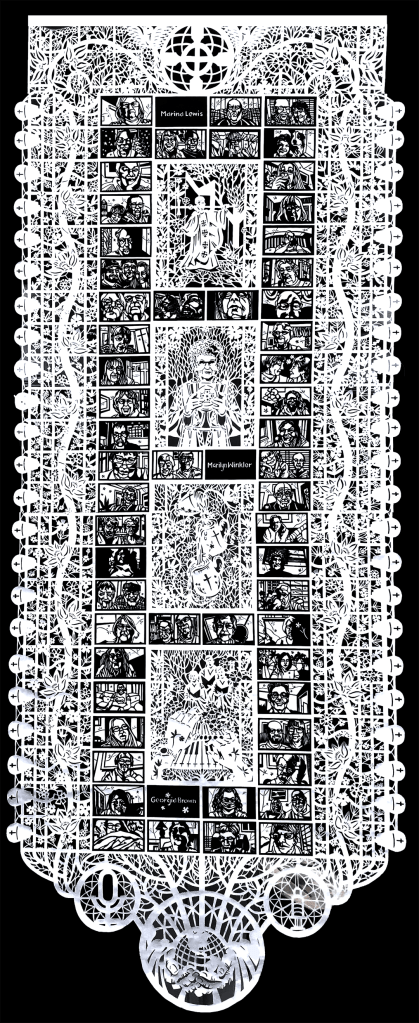
I had finished the piece just days before Holy Week 2021. Seeing it hung outside my studio, I felt overwhelmed with gratitude. I was thankful that our church community had remained connected during the Covid lockdown. Our priests had worked tirelessly to make that possible—learning new technologies, ensuring parishioners had access to devices, and supporting those who struggled online.
The arrangement of portraits suggested a protective barricade, lovingly constructed to safeguard the lives within each home sanctuary. Surrounding us all was the Holy Spirit—the giver of life and the embodiment of God’s abundant grace.
 Debra A. Collins
I think I recognize a few. Incredible work! An awesome project! Thanks for sharing your talent to create our zooming church!
LikeLike
Blown away by the depth of your work – creatively and spiritually 🙏
LikeLike
Thank you. It’s been quite the event for my church as I shared the individual portraits and the process via Facebook.
LikeLike
Debra, This is one of the most amazing things I have ever seen! It literally took my breath away. You have a wonderful talent, and I am so happy that you chose to share it on this page.
LikeLike
Thank you, Barbara. It was quite a challenge and a joy at the same time. Glad you enjoyed it.
LikeLike
Love this labor of love – Your heart shines through so beautifully! PTL!!
LikeLike
Thank you, Ann. It’s received well by my church community and appreciated in several juried art shows. If you happen to be in Glendale, CA between now and December, you can see it in person at the Brand 50: Annual National Juried Exhibition of Works on Paper
1601 W Mountain St. Glendale, CA. Blessings to you!
LikeLike
Hello Debra – So glad that your work is available for so many to see! We are in Arkansas, so won’t get to Glendale, CA – thanks for the invite. PTL!! and Blessings to you as well!
On Thu, Sep 22, 2022 at 2:31 AM Debra A. Collins < comment-reply@wordpress.com> wrote:
LikeLike